
Kısaca
- Japonya'nın MMX aracı 20 Ekim 2026'da fırlatıldı ve Mars'ın uydusu Phobos'tan en az 10 gram toprak getirmeyi hedefliyor.
- Araç Ağustos 2027'de Mars'a varacak, örnek kapsülü ise 2031'de Avustralya'ya inecek.
- Haber; spacecraft, sample, orbit, rover gibi uzay kelimelerini ve will, should, be planned to gibi gelecek yapılarını öğrenmek için çok uygun.
Mars'ın uydusu Phobos patates şeklinde, küçük ve hâlâ bir sır. Japonya şimdi oradan Dünya'ya toprak getirmek istiyor. Bu İngilizce haberi Temel, Orta ya da İleri seviyede oku, sonra Türkçe rehberle kelimeleri ve kalıpları pekiştir.
Metni oku
Seviyeni seç
Japan sent a new spacecraft into space on 20 October 2026. It went up on an H3 rocket. The rocket left from Tanegashima Space Center in Japan.
The mission is called MMX. Japan's space agency, JAXA, leads it. NASA and space agencies in Europe help too.
Mars has two small moons. Their names are Phobos and Deimos. They are not round. They look like big potatoes. Phobos is about 22 km wide.
Scientists do not know where these moons came from. Maybe they were asteroids. Maybe they are pieces of Mars from a big crash long ago.
The spacecraft weighs about five tons. It also carries a small robot car from France and Germany. The car is called Idefix.
MMX will arrive at Mars in August 2027. Then it will land on Phobos. It will take at least 10 grams of soil. Later, the soil will come back to Earth. It will land in Australia in 2031.
If all goes well, this will be the first soil from Phobos on Earth. Russia tried in 2011. But its rocket had a problem.
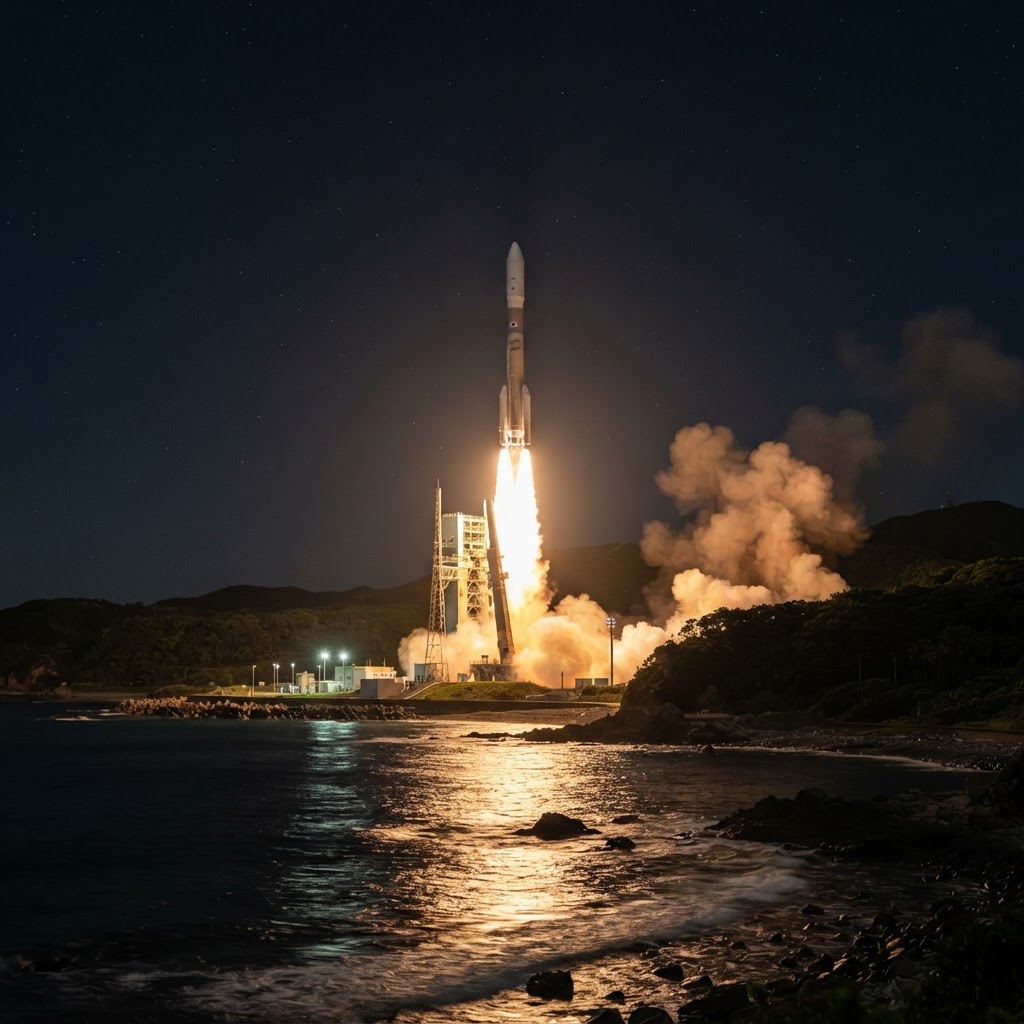
Japan has launched a spacecraft with a bold goal: to bring soil back from Phobos, one of the two moons of Mars. The Martian Moons eXploration mission, or MMX, lifted off on an H3 rocket from Tanegashima Space Center at 4:41 a.m. Japan time on 20 October 2026. According to Space.com, the spacecraft separated from the rocket about 71 minutes later, and people in mission control cheered loudly.
JAXA, Japan's space agency, leads the mission, and it is working with NASA, the European Space Agency and the French and German space agencies.
Phobos and Deimos have scary names, meaning "fear" and "terror". However, they are small, lumpy and shaped like potatoes. Phobos is only about 22 km wide. Scientists still do not know where the moons came from. They may be asteroids that Mars' gravity captured, or pieces that were thrown into orbit when something crashed into Mars long ago.
The five-ton spacecraft has three modules: one takes it to Mars, one studies Phobos and collects samples, and one brings them home. It also carries Idefix, a 25-kg rover from France and Germany. Because Phobos' gravity is so weak, the rover will weigh about as much as 15 grams would on Earth.
MMX should reach Mars in August 2027 and stay there for about three years. It will land on Phobos to pick up at least 10 grams of material, and it will also fly past Deimos several times. The capsule is planned to land in Australia in 2031.
If everything goes well, it will be the first mission to bring back samples from Phobos. Russia tried in 2011 with Phobos-Grunt, although a rocket problem meant it never left Earth orbit.
In the small hours of 20 October 2026, an H3 rocket thundered off the launch pad at Japan's Tanegashima Space Center, carrying a spacecraft with an unusually ambitious brief. The Martian Moons eXploration mission, better known as MMX, is designed to land on Phobos, the larger of Mars' two moons, scoop up some of its soil and deliver it to laboratories on Earth. According to Space.com, the probe separated from the rocket's upper stage roughly 71 minutes after liftoff, prompting loud cheers in mission control.
Led by the Japan Aerospace Exploration Agency (JAXA), the mission draws on expertise from NASA, the European Space Agency and the French and German space agencies. Phobos and Deimos, whose names translate as "fear" and "terror", are lumpy, potato-shaped bodies, and Phobos measures only about 22 km across. Their origins remain an open question. As Axios explains, they could be asteroids captured by Mars' gravity, or debris flung into orbit when something slammed into the planet long ago. A few grams of real soil could well hold the key to the puzzle.
The five-ton spacecraft is built in three modules: one to carry it to Mars, one to study and sample Phobos, and one to ferry the material home. Tucked aboard is Idefix, a 25-kg rover from France and Germany. Phobos' gravity is so feeble, ESA notes, that the rover will weigh roughly what 15 grams does on Earth.
Estimates of the journey differ slightly, with Space.com putting it at about ten months and ESA at around a year, but both expect MMX to arrive in August 2027 and stay for roughly three years. During that time it will touch down on Phobos to gather at least 10 grams of material from the surface and from below it, then make several flybys of Deimos without landing. The sample capsule is due to land in Australia in 2031, before travelling to Japan to be extracted, catalogued and shared with partner agencies.
Success would make MMX the first mission to return samples from Phobos and the first spacecraft to come back to Earth after visiting the Mars system. It would also succeed where an earlier attempt fell short: Russia's Phobos-Grunt, launched in November 2011, never made it out of Earth orbit because of a rocket problem.
Aynı metin üç seviyede yazıldı. Önce kendi seviyeni oku, sonra bir üst seviyeyi dene.
Mars'ın uydusu Phobos: haberin özeti
Japonya'nın uzay ajansı JAXA, 20 Ekim 2026'da (Japonya saatiyle sabah 4.41) MMX adlı aracı Tanegashima Uzay Merkezi'nden bir H3 roketiyle fırlattı. Görevde NASA, ESA, Fransa'nın CNES ve Almanya'nın DLR ajansları da yer alıyor. Amaç, Mars'ın iki küçük uydusundan biri olan Phobos'a inip en az 10 gram toprak almak ve bunu Dünya'ya getirmek. Phobos yaklaşık 22 km genişliğinde ve yuvarlak değil, patates gibi şekilsiz. Bilim insanları iki uydunun nereden geldiğini hâlâ bilmiyor: Mars'ın yakaladığı asteroitler olabilirler ya da çok eskiden Mars'a çarpan bir cismin yörüngeye fırlattığı parçalar.
- Varış: Ağustos 2027, ardından yaklaşık üç yıl Mars çevresinde kalış
- Araç: Yaklaşık beş ton, üç modül, Fransa ve Almanya yapımı 25 kg'lık Idefix keşif aracı
- Dönüş: Örnek kapsülü 2031'de Avustralya'ya inecek, oradan Japonya'ya gidecek
Başarılı olursa MMX, Phobos'tan örnek getiren ilk görev olacak. Rusya 2011'de Phobos-Grunt ile denemiş ama araç bir roket sorunu yüzünden Dünya yörüngesinden çıkamamıştı.
Metinden 5 kullanışlı ifade
| İfade | Anlamı | Örnek |
|---|---|---|
| lift off | havalanmak, kalkış yapmak | The plane lifted off on time. |
| bring back | geri getirmek | Can you bring back my book tomorrow? |
| according to | ...e göre | According to the news, the rocket left at night. |
| separate from | ...den ayrılmak | The spacecraft separated from the rocket. |
| hold the key to | bir şeyin anahtarı olmak | This old letter may hold the key to the mystery. |
According to kalıbı haber İngilizcesinin temel taşıdır: bilgiyi kimin verdiğini gösterir. Metinde "According to Space.com" şeklinde geçiyor.
Gramer: geleceği anlatmanın farklı yolları
Haberde gelecek tek bir yapıyla anlatılmıyor. Seviyeler arasında farklı seçenekler görüyorsun:
- will: MMX will arrive at Mars in August 2027. (Plan ya da tahmin, en temel yapı)
- should: MMX should reach Mars in August 2027. (Beklenti: "varması bekleniyor")
- be planned to: The capsule is planned to land in Australia in 2031. (Resmi bir plan)
- be due to: The sample capsule is due to land in Australia in 2031. (Takvime bağlı bir olay)
İpucu: Haberlerde should, is planned to ve is due to kesinlik değil, plan ve beklenti bildirir. Uzay görevlerinde tarihler değişebildiği için bu yapılar çok sık kullanılır.
Nasıl pratik yapabilirsin?
- 1Önce kendi seviyendeki metni oku, sonra bir üst seviyeye geç ve yeni kelimeleri işaretle. Seviyeni bilmiyorsan ücretsiz seviye testini çöz.
- 2Haberi 4 ya da 5 cümleyle sesli özetle. Tarih ve sayıları yüksek sesle söyle: "twenty twenty-seven", "twenty-two kilometres".
- 3Gelecek yapılarından her biriyle kendi planların hakkında bir cümle kur: "I should finish my project in May."
- 4Tartışma sorularından birini seç ve bir öğretmenle konuş. Bunu ücretsiz deneme dersinde deneyebilirsin.
Uzay haberlerini seviyorsan Ay'ın iki yüzü neden farklı haberini de oku.
Anahtar kelimeler
spacecraftisimuzay aracı
The spacecraft will reach Mars in August 2027.
lift offfiilhavalanmak, kalkış yapmak
The rocket lifted off early in the morning.
sampleisimörnek, numune
Scientists want to study a sample of the moon's soil.
orbitisimyörünge
The old mission never left Earth orbit.
roverisimkeşif aracı (gezgin robot)
The small rover will move across the surface of Phobos.
gravityisimyer çekimi, kütle çekimi
Phobos has very weak gravity.
bring backkalıpgeri getirmek
The mission will bring back soil to Earth.
hold the key tokalıpbir şeyin anahtarı olmak, çözümünü barındırmak
This small sample may hold the key to a big mystery.
Kaydettiğin kelimeler bu cihazda saklanır.
Öğretmeninle konuş
Tartışma soruları
- 1Why do you think scientists want real soil from Phobos instead of just photos?
- 2Many countries work together on this mission. What are the good and bad sides of international cooperation in science?
- 3Would you like to travel to Mars one day? Why or why not?
- 4Some people say space missions cost too much and the money should be spent on Earth. What do you think?
Bu soruları ücretsiz deneme dersinde öğretmeninle konuşabilirsin.
Sık sorulan sorular
Metin üç seviyede yazıldı: Temel (A1-A2), Orta (B1-B2) ve İleri (C1). Orta seviye metni, B1 seviyesinde İngilizce okuma metni arayanlar için iyi bir başlangıç. Emin değilsen önce ücretsiz seviye testini çözebilirsin.
Haberde aktarılan plana göre araç Ağustos 2027'de Mars'a varacak ve yaklaşık üç yıl orada kalacak. Örnek kapsülünün 2031'de Avustralya'ya inmesi planlanıyor. Uzay görevlerinde takvim değişebildiği için haberde should ve is planned to gibi yapılar kullanılıyor.
Önce kendi seviyendeki metni oku, sonra bir üst seviyeye geçip aynı olayın nasıl farklı kelimelerle anlatıldığına bak. Yeni kelimeleri tek başına değil, metindeki cümleyle birlikte not al. Ertesi gün haberi kendi cümlelerinle sesli özetlemek kelimeleri kalıcı hale getirir.
Bu haberde spacecraft (uzay aracı), launch ve lift off (fırlatmak, havalanmak), orbit (yörünge), sample (örnek), rover (keşif aracı) ve gravity (yer çekimi) öne çıkıyor. Bu kelimeler uzayla ilgili İngilizce haberlerde sık sık karşına çıkar.
Kaynaklar
- Japan launches historic MMX sample-return mission to Mars' moon Phobos (video) · Space.com, 2026-10-19
- New space mission aims to grab Mars moon soil · Axios, 2026-10-19
- Mars moon lander set to launch on 19 October · European Space Agency (ESA), 2026-10-13
İngilizce konuşmaya bu hafta başla
25 dakikalık birebir deneme dersi ücretsiz. Kart bilgisi istemiyoruz.


