
Kısaca
- Bilim insanları NASA'nın Chandra teleskobunun herkese açık eski verilerinde, altı gökadaya dağılmış, yeni türden 84 X-ışını kaynağı buldu.
- Bu cisimlerin ne olduğu henüz kesin bilinmiyor, ancak Tip Ia süpernovalarla ilgili uzun süredir çözülemeyen bir gizeme ışık tutabilirler.
- Haber, give off, comb through ve blind spot gibi kalıpları ve edilgen yapıyı doğal bir bağlamda görmen için iyi bir fırsat.
Uzayda gizemli X-ışını kaynakları, yeni bir teleskopla değil, yıllardır arşivde bekleyen eski verilerle bulundu. Bu haber, uzay ingilizce haber okuma pratiği için iyi bir başlangıç. Aşağıdaki Temel, Orta ve İleri seviyelerden sana uygun olanı seç, oku, sonra Türkçe rehberle kalıpları pekiştir.
Metni oku
Seviyeni seç
Scientists found a new kind of object in space. They used NASA's Chandra X-ray telescope. NASA shared the news on 9 September 2026.
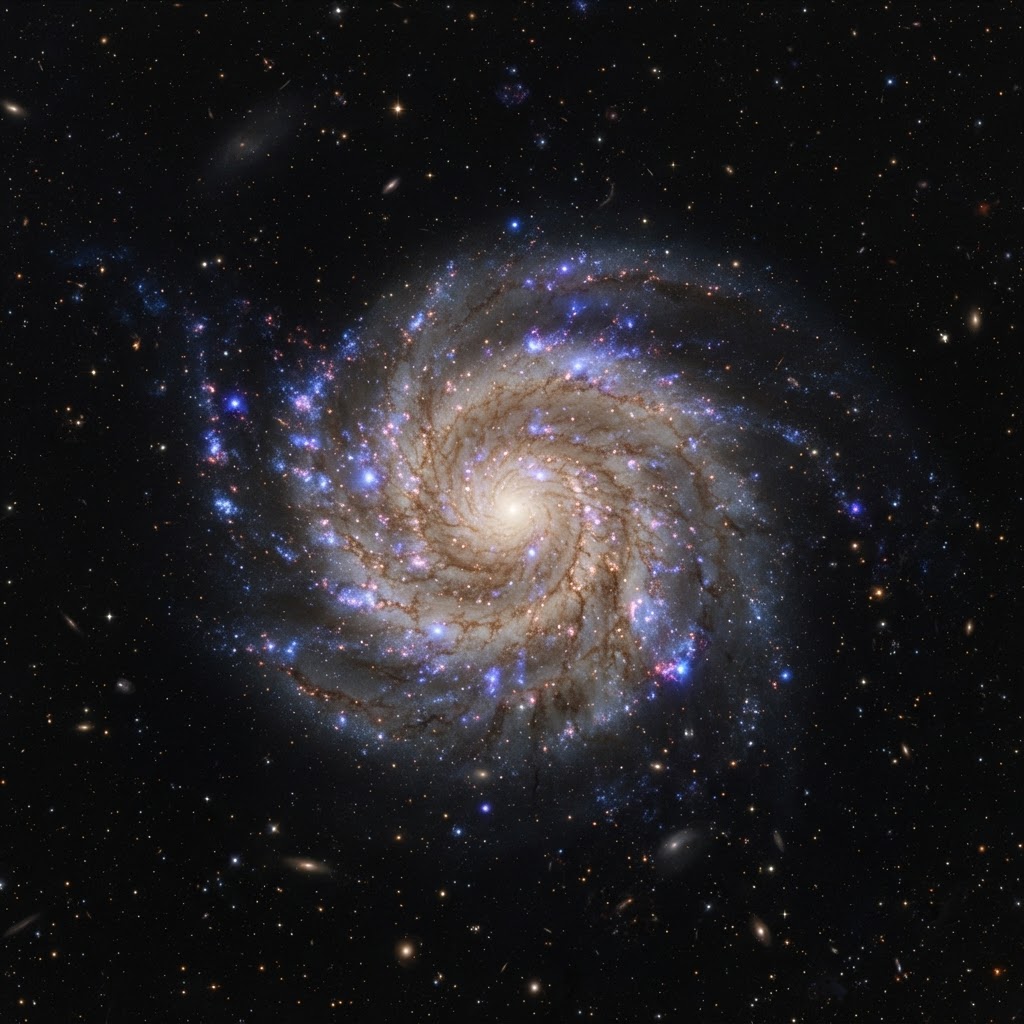
The team found 84 of these objects. They are in six different galaxies. Two of them are Andromeda and the Pinwheel Galaxy.
The objects give off X-rays with very low energy. Scientists call them "hypersoft" X-ray sources. The objects also make strong ultraviolet light.
The team did not take new pictures. They looked at old Chandra data. This data is free for everyone. It is from the years 1999 to 2017. BBC Sky at Night Magazine reports this.
Why did nobody see them before? Low-energy X-rays are hard to see. Gas between the stars also blocks the ultraviolet light.
What are these objects? Nobody knows for sure yet. It may be a black hole or a dead star. It pulls gas from a partner star. The gas gets very hot.
The objects may help answer an old question. Some stars explode in a special way. Scientists want to find these stars before they explode.
Astronomers have discovered a new class of objects that behave unlike anything they had seen before. The team used NASA's Chandra X-ray Observatory, and the study was published in the journal Nature Astronomy. NASA announced it on 9 September 2026.
The researchers found 84 of these objects in six galaxies, including Andromeda and the Pinwheel Galaxy. They are called "hypersoft X-ray sources" because the X-rays they give off have very low energy. The team believes they must also produce strong ultraviolet light, since these two types of radiation sit next to each other on the electromagnetic spectrum.
The team did not need new observations. Instead, they went through old Chandra data that anyone can use for free, looking for objects that showed up in the lowest-energy images but disappeared at higher energies. According to BBC Sky at Night Magazine, the data was collected between 1999 and 2017, so more objects may still be waiting in the archive.
Although nobody knows exactly what the objects are, the best guess is a black hole, a neutron star or a white dwarf that pulls gas from a partner star. The gas becomes hot enough to give off X-rays.
The discovery could help solve two puzzles. First, it may explain Type Ia supernovae, exploding stars that astronomers use to measure how fast the universe is expanding. So far, nobody has found these stars before they explode. Second, the objects might explain what removes electrons from gas between stars, a process that affects how quickly new stars form.
The objects stayed hidden for so long because low-energy X-rays are hard to detect, and gas between the stars absorbs ultraviolet light.
Sometimes the most remarkable discoveries are made not by pointing a telescope at a new patch of sky, but by looking again at what has already been recorded. That is exactly how a team of astronomers uncovered a new class of objects unlike anything seen before, in a study published in Nature Astronomy and announced by NASA on 9 September 2026.
Rather than requesting fresh observations, the researchers combed through Chandra X-ray Observatory data that is freely available to the public. They were looking for sources that shone in the lowest-energy X-ray images yet vanished entirely at higher energies. In the end, they identified 84 of these so-called hypersoft X-ray sources scattered across six galaxies: the spirals Andromeda and Pinwheel, along with four elliptical galaxies. Because such low-energy X-rays border on ultraviolet light in the electromagnetic spectrum, the team concluded that the objects must also be giving off powerful ultraviolet radiation.
According to BBC Sky at Night Magazine, the objects turned up in data gathered between 1999 and 2017, which hints that others may still be lurking in the archive. Their long concealment has two causes: low-energy X-rays are notoriously difficult to detect, and the hydrogen and helium drifting between stars soaks up ultraviolet light. One co-author, Rosanne Di Stefano of the Center for Astrophysics, Harvard & Smithsonian, described the archival search as a way of eliminating a blind spot in what telescopes can see.
What the objects actually are remains an open question. The leading explanation is a compact body, such as a black hole, neutron star or white dwarf, stripping gas from a companion star and heating it until it glows in X-rays. Curiously, they appear both in star-forming regions and in areas dominated by older stars.
If confirmed, the findings could shed light on a long-standing mystery. Type Ia supernovae, which astronomers rely on to measure the expansion of the universe, have so far been studied only after they explode, and the stars that produce them have proved stubbornly elusive. Spotting them in advance, as co-author Jimmy Irwin pointed out, would be a major step. The objects might also help explain what strips electrons from interstellar gas in some galaxies, a process that hot, massive stars alone cannot fully account for.
Aynı metin üç seviyede yazıldı. Önce kendi seviyeni oku, sonra bir üst seviyeyi dene.
Uzayda gizemli X-ışını kaynakları: haberin özü
NASA'nın 9 Eylül 2026'da duyurduğu ve Nature Astronomy dergisinde yayımlanan çalışmaya göre, astronomlar daha önce görülmemiş bir cisim türü buldu. Ekip yeni gözlem yapmadı: Chandra X-ışını Gözlemevi'nin herkese ücretsiz açık eski verilerini taradı. Sonuçta Andromeda ve Fırıldak Gökadası (Pinwheel) dahil altı gökadada 84 kaynak tespit edildi. Bu kaynaklara hypersoft, yani çok düşük enerjili X-ışını kaynakları deniyor. Ne oldukları henüz kesin değil. En güçlü tahmin, yanındaki yıldızdan gaz çeken bir kara delik, nötron yıldızı ya da beyaz cüce.
Neden bu kadar uzun süre saklı kaldılar?
- Düşük enerjili X-ışınlarını teleskopla tespit etmek zor.
- Yıldızlar arasındaki hidrojen ve helyum gazı ultraviyole ışığı emiyor.
Haberden 5 faydalı İngilizce kalıp
| Kalıp | Anlamı | Örnek |
|---|---|---|
| a new class of objects | yeni bir cisim türü | Astronomers found a new class of objects. |
| give off | yaymak, salmak | The hot gas gives off X-rays. |
| comb through | didik didik taramak | The team combed through old data. |
| a blind spot | kör nokta | Low-energy X-rays were a blind spot. |
| shed light on | bir konuya ışık tutmak | The study may shed light on a long-standing mystery. |
İpucu: "shed light on" bilim haberlerinde sık görülür ama günlük hayatta da kullanılır: "Can you shed light on this problem?"
Dil notu: edilgen yapı (passive voice)
Bilim haberlerinde işi kimin yaptığından çok, ne yapıldığı önemlidir. Bu yüzden metinde edilgen yapı sık geçiyor. Kural basit: be + fiilin üçüncü hali.
- The study was published in Nature Astronomy. (Çalışma yayımlandı.)
- They are called hypersoft X-ray sources. (Onlara ... deniyor.)
- The data was collected between 1999 and 2017. (Veriler toplandı.)
Zamanı "be" fiili gösterir: is/are şimdiki, was/were geçmiş zaman.
Nasıl pratik yaparsın?
- 1Önce kendi seviyendeki metni oku, sonra bir üst seviyeye geç ve aynı bilgilerin nasıl anlatıldığını karşılaştır. Seviyenden emin değilsen ücretsiz seviye testini çöz.
- 2Tablodaki beş kalıpla kendi cümlelerini yaz ve sesli oku.
- 3Tartışma sorularından birini seç, iki dakika boyunca İngilizce cevapla. Günlük konuşma ve dinleme alışkanlığı için Pratik Yap bölümünü deneyebilirsin.
- 4Haber okumayı konuşmaya dönüştürmek istiyorsan, canlı birebir derslerle ilerleyen online İngilizce kursumuz sana düzenli bir yapı sunar. İlk adım olarak ücretsiz deneme dersi alabilirsin.
Uzay haberleriyle devam etmek istersen James Webb ve lav gezegeni haberine göz at.
Anahtar kelimeler
discoverfiilkeşfetmek
Astronomers discovered 84 strange objects in old data.
archiveisimarşiv
The telescope's archive is free for anyone to use.
radiationisimradyasyon, ışınım
The objects give off strong ultraviolet radiation.
give offkalıpyaymak, salmak
Hot gas gives off X-rays.
comb throughkalıpdidik didik incelemek, taramak
The team combed through years of old images.
blind spotkalıpkör nokta
Low-energy X-rays were a blind spot for telescopes.
detectfiiltespit etmek, algılamak
Low-energy X-rays are hard to detect.
long-standing mysterykalıpuzun süredir çözülemeyen gizem
The discovery may help solve a long-standing mystery.
Kaydettiğin kelimeler bu cihazda saklanır.
Öğretmeninle konuş
Tartışma soruları
- 1Why do you think old data can still lead to new discoveries?
- 2Which do you find more exciting: discoveries in space or discoveries on Earth? Why?
- 3Do you think governments should spend money on space telescopes? Explain your opinion.
- 4Have you ever found something important that was hidden in plain sight? Tell the story.
Bu soruları ücretsiz deneme dersinde öğretmeninle konuşabilirsin.
Sık sorulan sorular
Uzay ingilizce haber okuma her seviyeye uygun olabilir, yeter ki metin seviyene göre yazılmış olsun. Bu yazıda aynı haberi Temel (A1-A2), Orta (B1-B2) ve İleri (C1) seviyede bulabilirsin. Kendine uygun olandan başla, rahatladıkça bir üst seviyeye geç.
Her kelimeye sözlükte bakma, önce metnin genel anlamını yakalamaya çalış. Sonra en sık tekrar eden 5 ila 8 kelimeyi seç ve cümle içinde not al. Bu yazıdaki kelime listesi tam bu amaçla hazırlandı.
Bilim yazılarında önemli olan çoğunlukla işi kimin yaptığı değil, ne bulunduğu ya da ne yapıldığıdır. Bu yüzden "The study was published" gibi edilgen cümleler sık kullanılır. Bu yapıyı tanımak, İngilizce haber metinlerini çok daha kolay anlamanı sağlar.
Okumak kelime ve kalıp dağarcığını büyütür, ama konuşmak için bu kalıpları kullanman gerekir. Okuduğun haberi sesli özetlemek ya da bir öğretmenle tartışmak, öğrendiklerini konuşmaya taşımanın en etkili yoludur.
Kaynaklar
- NASA's Chandra Unveils Mysterious X-Ray Objects · NASA Science, 2026-09-09
- Scientists have found strange objects in deep space unlike anything seen before. And they could help solve a huge mystery in space science · BBC Sky at Night Magazine, 2026-11-08
İngilizce konuşmaya bu hafta başla
25 dakikalık birebir deneme dersi ücretsiz. Kart bilgisi istemiyoruz.


