Kısaca
- Viyana ve Pekin'deki iki ekip, Nature dergisinde yayımlanan iki makaleyle dünyanın ilk çalışan nükleer saatlerini tanıttı.
- Bu saatler zamanı elektronlarla değil, doğrudan atom çekirdeğindeki değişimle ölçüyor, ancak henüz deneme aşamasındalar ve bugünün en iyi saatlerini geçmiş değiller.
- Metinden "keep time", "breakthrough" ve "so ... that" gibi kalıpları öğrenip kendi cümlelerinde kullanabilirsin.
Zamanı atomun çekirdeğiyle ölçen ilk nükleer saatler Viyana ve Pekin'de çalıştı. Bu nükleer saat İngilizce haber metni, GPS ve deprem tahmini gibi konuları sade kelimelerle anlatıyor. Temel, Orta ya da İleri seviyeni seç, oku, ardından Türkçe rehberle kalıpları pekiştir.
Metni oku
Seviyeni seç
Scientists in two cities built a new kind of clock. One team works in Vienna, in Austria. The other team works in Beijing, in China. They wrote about their clocks in the journal Nature.
These are the first working nuclear clocks in the world. According to ABC News, they are very accurate. In 30 million years, they would be wrong by about one second.
Most good clocks today are atomic clocks. They watch the electrons around the centre of an atom. The new clocks look inside the centre itself. This centre is called the nucleus. It is thousands of times smaller than the atom.
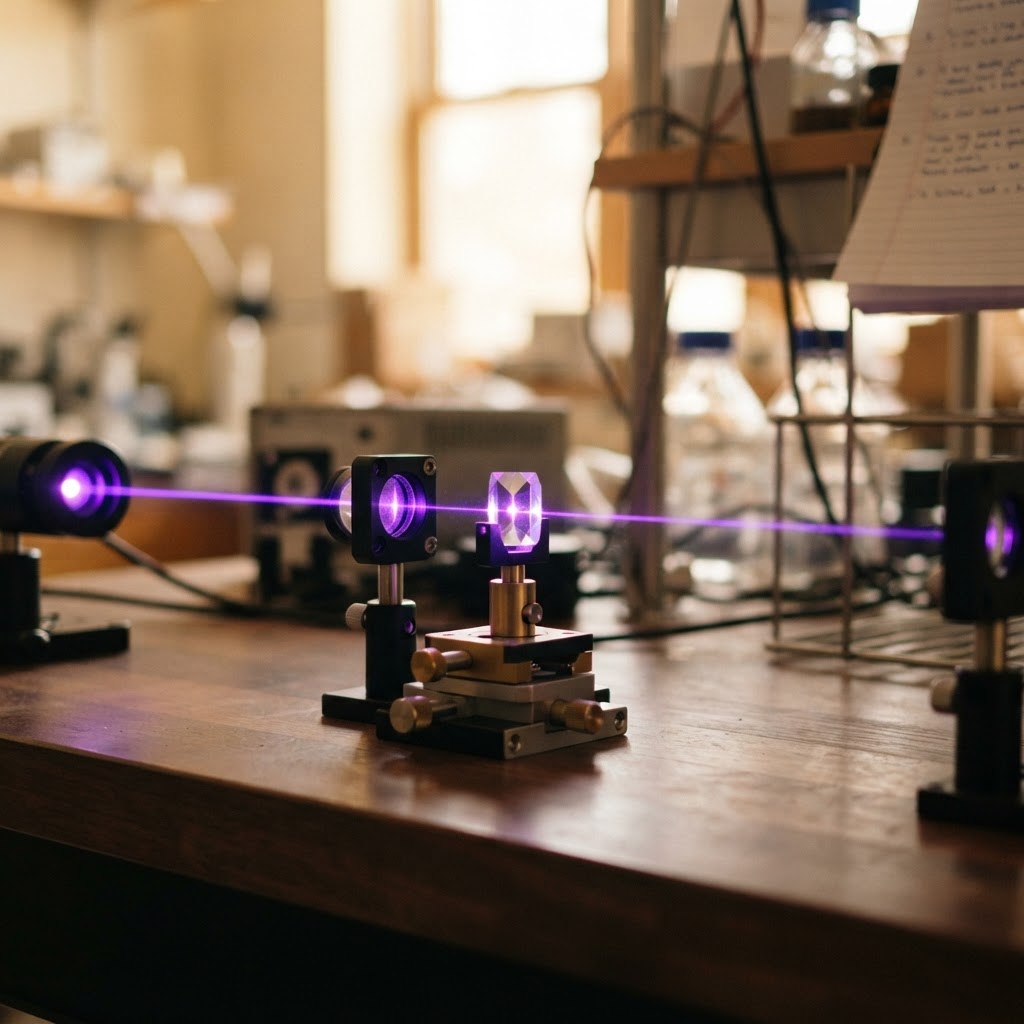
Both teams used a special atom called thorium-229. They put it in crystals. Then they shone very exact lasers on the crystals.
The clocks are still new. Scientists are still testing them. They are not better than today's best clocks yet. But the teams think they can improve them quickly.
In the future, these clocks may help GPS work better. They may also help scientists predict earthquakes. One scientist in Vienna says they could become very small. Maybe one day they will be the size of a computer chip.
Two research teams, one in Vienna and one in Beijing, have built the world's first working nuclear clocks. They described their results in two papers in the scientific journal Nature.
According to ABC News, both clocks are so accurate that they would lose or gain only about one second if they ran for 30 million years. However, they are still in the experimental stage and are not yet more accurate than the best clocks we use today. Even so, both teams expect to improve them quickly.
So what makes them different? Today's atomic clocks keep time by tracking changes in the electrons that move around the nucleus of a caesium atom. A nuclear clock, on the other hand, measures changes inside the nucleus itself, which is thousands of times smaller than the whole atom.
Both teams worked with thorium-229, a special kind of thorium atom. They grew crystals containing it and shone extremely precise lasers on them to create tiny "ticks" in the nucleus. Although the goal was the same, the methods were different. The Vienna group used crystals with more thorium and better optical quality, while the Beijing group relied on an especially powerful laser. As Tsinghua physicist Shiqian Ding pointed out, reaching the same result in two different ways shows that the idea really works.
The key breakthrough came in early 2024, when the Vienna team first used a laser to change the thorium nucleus in the way scientists had predicted. Experts now hope nuclear clocks will improve GPS and, by measuring tiny effects of gravity on time, help with mining and earthquake prediction. Vienna physicist Thorsten Schumm even believes they could one day shrink to the size of a computer chip.
For decades, the gold standard of timekeeping has been the atomic clock. Now, according to two papers published in the journal Nature, researchers in Vienna and Beijing have independently built a new kind of timekeeper that looks even deeper inside matter: the world's first working nuclear clocks.
The distinction lies in what is being measured. Conventional atomic clocks keep time by monitoring changes in the electrons orbiting the nucleus of a caesium atom. Nuclear clocks go further, tracking transitions within the nucleus itself, a target thousands of times smaller than the atom as a whole. ABC News reports that both new devices are precise enough to drift by only about one second over 30 million years. That said, they remain firmly in the experimental stage and have yet to surpass the best clocks currently in operation, although both teams are confident of rapid gains.
Each group grew crystals containing thorium-229, an unusual form of thorium, and trained extraordinarily precise lasers on them to coax tiny "ticks" out of the nucleus. Their routes, however, diverged. The Vienna team, based at TU Wien, opted for crystals richer in thorium and of higher optical quality, whereas the Beijing team, from Tsinghua University and the Beijing Academy of Quantum Information Sciences, leaned on an exceptionally powerful laser. For Tsinghua physicist Shiqian Ding, the fact that two different approaches arrived at the same destination simultaneously is evidence that the concept is robust.
The achievement has been a long time coming. ABC describes nuclear clocks as having been theorised for more than twenty years, while Vienna physicist Thorsten Schumm, speaking to the American Nuclear Society, puts the dream closer to half a century and says his team has pursued it since 2008. The turning point arrived in early 2024, when his group first used a laser to trigger the predicted change in the thorium nucleus.
The potential applications are far-reaching. Sharper timekeeping could refine GPS and other satellite navigation, mobile and fibre-optic communications, data synchronisation and surveying, while sensing gravity's subtle effect on time might aid mineral exploration and earthquake prediction. Schumm even envisages clocks shrinking to the size of a computer chip. His team has already put its clock to work in the hunt for dark matter, and he plans to install a second one in Innsbruck within a year to work alongside the Vienna clock.
Aynı metin üç seviyede yazıldı. Önce kendi seviyeni oku, sonra bir üst seviyeyi dene.
Nükleer saat nedir, atom saatinden farkı ne?
Bugün kullandığımız en iyi saatler atom saatleridir. Atom saati nedir diye soruyorsan kısaca şöyle: sezyum atomunun çekirdeği etrafındaki elektronlarda olan değişimleri izleyerek zamanı ölçen saattir. Nükleer saat bir adım daha ileri gider ve doğrudan çekirdeğin içindeki değişimi ölçer. Çekirdek, atomun tamamından binlerce kat küçüktür.
Nature dergisindeki iki makaleye göre Viyana ve Pekin'deki iki ekip, thorium-229 içeren kristallere çok hassas lazerler tutarak ilk çalışan nükleer saatleri yaptı. ABC News'e göre bu saatler 30 milyon yılda yalnızca yaklaşık bir saniye şaşar. Yine de hâlâ deneme aşamasındalar ve henüz bugünün en iyi saatlerini geçmiş değiller.
Metinden 5 faydalı kalıp
| İngilizce | Türkçe | Örnek |
|---|---|---|
| keep time | zamanı ölçmek, saati doğru göstermek | My phone keeps time better than my old watch. |
| in the experimental stage | deneme aşamasında | The project is still in the experimental stage. |
| breakthrough | çığır açan buluş | The key breakthrough came in early 2024. |
| rely on | bir şeye dayanmak, güvenmek | The Beijing group relied on a powerful laser. |
| so ... that | o kadar ... ki | The test was so easy that everyone passed. |
Gramer notu: so + sıfat + that
Orta seviyedeki metinde şu cümle var:
Both clocks are so accurate that they would lose or gain only about one second if they ran for 30 million years.
Yapı şöyle: so + sıfat (ya da zarf) + that + sonuç cümlesi. Türkçedeki "o kadar ... ki" kalıbına denk gelir. Dikkat etmen gereken bir nokta var: araya isim girerse such kullanırsın.
- The clock is so accurate that scientists are excited.
- It is such an accurate clock that scientists are excited.
Cümledeki would ve if they ran ise hayali bir durumu anlatır: saat gerçekten 30 milyon yıl çalışmayacak, sadece "çalışsaydı" diye düşünüyoruz.
Nasıl çalışırsın?
- 1Seviyeni bilmiyorsan önce ücretsiz seviye testini çöz.
- 2Kendi seviyendeki metni bir kez anlamak için, bir kez de yeni kalıpları işaretleyerek oku.
- 3Bir üst seviyeye geç ve aynı bilginin nasıl farklı anlatıldığına bak. Örneğin Temel metinde "very exact lasers", Orta metinde "extremely precise lasers", İleri metinde "extraordinarily precise lasers" geçiyor.
- 4so ... that ile kendi hayatından üç cümle yaz.
- 5Haberi bir dakikada sesli özetle. Düzenli dinleme ve konuşma için Pratik Yap ünitelerini deneyebilirsin.
Bilim haberleri hoşuna gittiyse Ay'ın iki yüzünü anlatan haberi de üç seviyede okuyabilirsin.
Anahtar kelimeler
keep timekalıpzamanı ölçmek, saati doğru göstermek
This old watch still keeps time very well.
accuratesıfatdoğru, hassas
We need accurate information before we decide.
nucleusisimçekirdek (atom çekirdeği), çoğulu: nuclei
The nucleus is at the centre of the atom.
breakthroughisimçığır açan buluş, büyük ilerleme
The new vaccine was a major breakthrough.
independentlyzarfbirbirinden bağımsız olarak
The two students solved the problem independently.
in the experimental stagekalıpdeneme aşamasında
The new app is still in the experimental stage.
rely onfiilbir şeye dayanmak, güvenmek
Many drivers rely on GPS to find their way.
a long time comingkalıpuzun zamandır beklenen
Her promotion was a long time coming.
Kaydettiğin kelimeler bu cihazda saklanır.
Öğretmeninle konuş
Tartışma soruları
- 1Why do you think two teams in different countries reached the same goal at the same time?
- 2How often do you use GPS or other navigation apps, and what would change if they were more accurate?
- 3If clocks became the size of a computer chip, where else might we use them?
- 4Do you think big scientific projects that take many years are worth the time and effort? Why or why not?
Bu soruları ücretsiz deneme dersinde öğretmeninle konuşabilirsin.
Sık sorulan sorular
Atom saati, sezyum atomunun çekirdeği etrafındaki elektronlardaki değişimleri izleyerek zamanı ölçer. Nükleer saat ise doğrudan çekirdeğin içindeki değişimi ölçer. Viyana ve Pekin'deki ekipler bunun için thorium-229 içeren kristaller ve çok hassas lazerler kullandı.
Henüz değil. ABC News'e göre yeni saatler 30 milyon yılda yalnızca yaklaşık bir saniye şaşacak kadar hassas, ama hâlâ deneme aşamasındalar ve bugünün en iyi saatlerini geçmiş değiller. İki ekip de saatleri hızla geliştirmeyi bekliyor.
Metin üç seviyede yazıldı: Temel (A1-A2), Orta (B1-B2) ve İleri (C1). Orta seviye, B1 İngilizce okuma metni arayanlar için iyi bir başlangıç olur. Hangi seviyede olduğundan emin değilsen ücretsiz seviye testiyle başlayabilirsin.
Kelimeyi tek başına değil, metindeki cümleyle birlikte not al. Ertesi gün ve birkaç gün sonra yeniden bak, kendi hayatından bir örnek cümle kur. Haberi sesli özetlemek, kelimeleri pasif bilgiden aktif kullanıma taşır.
Kaynaklar
- Nuclear clocks could become world's most accurate timekeepers · ABC News (Australia), 2026-10-08
- Researchers in Vienna and Beijing report nuclear clock "milestone" · American Nuclear Society (Nuclear Newswire), 2026-10-09
İngilizce konuşmaya bu hafta başla
25 dakikalık birebir deneme dersi ücretsiz. Kart bilgisi istemiyoruz.