Kısaca
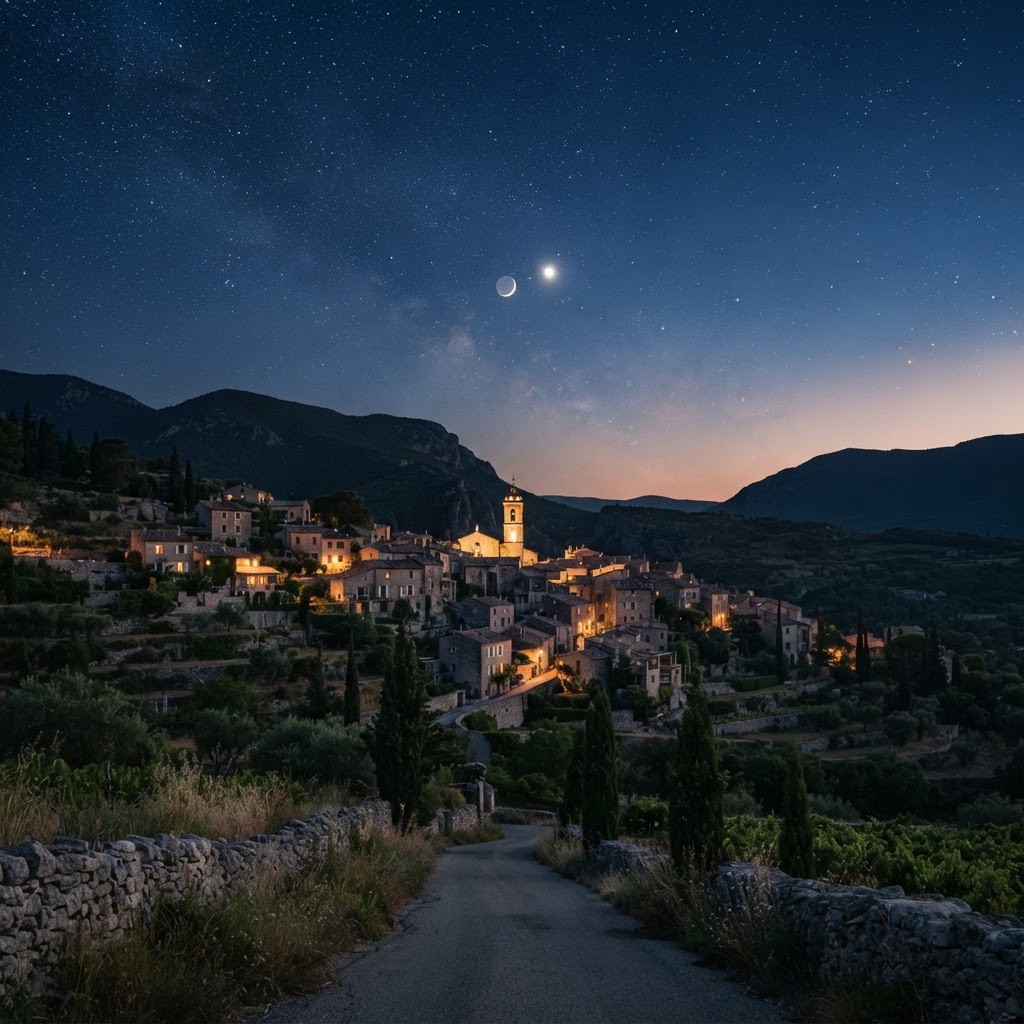
- Güney Koreli bir ekibe göre Yıldızlı Gece, 22 Temmuz 1889 civarında Saint-Rémy üzerindeki şafak öncesi gökyüzüne uyuyor.
- Sanat tarihçileri ise Van Gogh'un kardeşi Theo'ya yazdığı mektuba dayanarak tabloyu Haziran 1889'a tarihliyor.
- Van Gogh Müzesi bu fikre karşı çıkıyor, bağımsız bir fizikçi de tarihi ilginç ama kesinleşmemiş bir hipotez olarak görüyor.
Van Gogh Yıldızlı Gece tablosundaki gökyüzü gerçek miydi? Güney Koreli astronomlar o geceyi bulduklarını söylüyor, sanat tarihçileri ise itiraz ediyor. Bu Van Gogh Yıldızlı Gece İngilizce haber metnini üç seviyede hazırladık. Temel, Orta ve İleri seviyelerden sana uyanı seç ve oku.
Metni oku
Seviyeni seç
The Starry Night is a very famous painting. Vincent van Gogh painted it in 1889. Now some scientists say they know the real sky in it.
The team is from South Korea. Their study came out on October 22, 2026. They say the painting shows the early morning sky in France. The date is around July 22, 1889.
At that time, van Gogh was 36 years old. He lived in a hospital in Saint-Rémy. He was ill, and he looked at the sky from his window.
The scientists used special computer programs. They looked at every night sky in June and July 1889. In June, the moon was more than half full. In July, there was a thin moon above Venus. The weather on that night was also clear.
But not everyone agrees with the scientists. Van Gogh wrote letters to his brother Theo. In June, he said he finished a picture of a starry sky. The Van Gogh Museum says he was very ill in late July. He did not paint for about a month.
So the question is still open. Did he see the sky in June or July?
A team of astronomers from South Korea believes it has found the exact sky that inspired Vincent van Gogh's The Starry Night. However, as Smithsonian Magazine reports, not everyone is convinced.
The study was published in the journal Scientific Reports on October 22, 2026. It was led by Elijah Jeong-hyun Kim, who runs a telescope company in Seoul and is also studying for a PhD at Kyung Hee University. According to the team, the painting matches the sky before dawn over Saint-Rémy-de-Provence, France, around July 22, 1889.
In the summer of 1889, van Gogh was 36 and staying in an asylum in Saint-Rémy, where he was recovering from several mental health crises. From his window, he looked out at the early morning sky.
To test their idea, the researchers used astronomy software to recreate every night sky of June and July 1889. They compared the positions of the stars, the crescent moon and Venus, but ignored size and colour because the artist may have exaggerated them. They also argue that the group of stars in the painting is the Hyades, a V-shaped cluster in the constellation Taurus. In mid-June the moon was more than half full, so it did not look like the thin crescent in the picture. Around July 22, however, the moon sat above Venus and the weather was clear.
Art historians, on the other hand, usually date the painting to June, because van Gogh told his brother Theo in a letter that he had finished a new study of a starry sky. The Van Gogh Museum in Amsterdam also points out that he had a serious breakdown around July 22 and stopped painting for about a month. As a result, the debate is far from over.
The Starry Night is one of the most recognisable images in Western art, painted in 1889 while van Gogh, then 36, was recovering in an asylum in Saint-Rémy-de-Provence. Yet the swirling sky above the village has long kept its secrets. Now a team of South Korean astronomers claims to have pinned it down to a specific moment: the hours before dawn around July 22, 1889. Not everyone, however, is convinced.
The study, published in Scientific Reports on October 22, 2026, was a joint project between SLLAB, a Seoul telescope company, and Kyung Hee University's School of Space Research. Its lead author, Elijah Jeong-hyun Kim, runs the company while completing a PhD. Using astronomy software, the team reconstructed every night sky of June and July 1889 and compared the positions of the stars, the crescent moon and Venus with those on the canvas. Size and colour were deliberately set aside, since van Gogh may well have exaggerated them. To measure how closely the painted stars resembled real patterns, the researchers turned to a statistical technique known as Procrustes shape analysis.
Their conclusion challenges earlier work that identified the star group as Aries, which Kim considers too faint at dawn to have caught a painter's eye. Instead, he argues, it is the Hyades, a V-shaped cluster in Taurus. In mid-June the moon was waning gibbous, hardly the slender crescent in the painting, whereas around July 22 the Hyades rose alongside Venus, the moon hung above the planet, and a weather analysis suggests the night was clear.
The trouble is that the documentary evidence points elsewhere. In a letter to his brother Theo in mid-June, van Gogh mentioned a new study of a starry sky, which is why art historians date the work to that month. Kim's answer is that the idea came in June and the painting was finished after July 22. The Van Gogh Museum in Amsterdam is unpersuaded: the artist, it says, did not try to paint exact likenesses, and a severe breakdown around that date kept him from painting for roughly a month.
Jose Luis Aragon, a physicist in Mexico who was not involved, offered a measured verdict to Smithsonian Magazine: the July date is an intriguing hypothesis rather than a settled answer. The more compelling point, in his view, is that van Gogh studied the real sky closely, and the painting is far from pure fantasy.
Aynı metin üç seviyede yazıldı. Önce kendi seviyeni oku, sonra bir üst seviyeyi dene.
Van Gogh Yıldızlı Gece: haberde ne anlatılıyor?
Güney Koreli bir ekip, 22 Ekim 2026'da Scientific Reports dergisinde bir çalışma yayımladı. Ekibe göre Yıldızlı Gece tablosu, Fransa'daki Saint-Rémy-de-Provence üzerinde 22 Temmuz 1889 civarındaki şafak öncesi gökyüzünü gösteriyor. Araştırmacılar Haziran ve Temmuz 1889'un tüm gecelerini yazılımla yeniden oluşturdu, yıldızların, hilalin ve Venüs'ün konumlarını karşılaştırdı. Tablodaki yıldız grubunun Boğa takımyıldızındaki V şeklindeki Hyades kümesi olduğunu savunuyorlar.
Sorun şu: Van Gogh, Haziran ortasında kardeşi Theo'ya yeni bir yıldızlı gökyüzü çalışmasını bitirdiğini yazmıştı. Amsterdam'daki Van Gogh Müzesi de ressamın 22 Temmuz civarında ağır bir kriz geçirdiğini ve yaklaşık bir ay resim yapamadığını hatırlatıyor.
Metinden öğrenebileceğin 4 kalıp
| İngilizce | Türkçe | Örnek |
|---|---|---|
| before dawn | şafaktan önce | I woke up before dawn to see the stars. |
| not everyone is convinced | herkes ikna olmuş değil | The idea is popular, but not everyone is convinced. |
| date the painting to June | tabloyu Haziran'a tarihlemek | Experts date the painting to June 1889. |
| an intriguing hypothesis rather than a settled answer | kesin bir cevaptan çok ilginç bir hipotez | For now, it is an intriguing hypothesis rather than a settled answer. |
Son kalıpta rather than yapısına dikkat et: "A rather than B", "B yerine A" ya da "B'den çok A" anlamı verir ve akademik metinlerde çok sık geçer.
Dilbilgisi: aktarılan cümlede past perfect
Orta seviyedeki şu cümleye bak:
van Gogh told his brother Theo in a letter that he had finished a new study of a starry sky.
Van Gogh mektupta muhtemelen "I have finished a new study" gibi bir şey yazdı. Bunu geçmişte aktarırken zaman bir adım geriye kayar: have finished yerine had finished gelir. Kural kısaca şöyle:
- "I finish" → he said he finished
- "I have finished" → he said he had finished
- "I will finish" → he said he would finish
Temel seviyede aynı fikir daha sade verilmiş: "he said he finished a picture". Günlük konuşmada bu da kabul edilir, ama yazıda past perfect daha doğru ve net olur.
Nasıl çalışmalısın?
- 1Önce kendi seviyendeki metni oku, sonra bir üst seviyeye geç ve yeni kalıpları işaretle.
- 2Yukarıdaki dört kalıpla kendi hayatından birer cümle kur.
- 3Haberi sesli olarak bir dakikada özetle: kim, ne dedi, kim karşı çıktı?
Hangi metinle başlayacağından emin değilsen ücretsiz seviye testini çöz. Günlük dinleme ve konuşma için Pratik Yap bölümünü deneyebilir, bu haberi bir öğretmenle tartışmak için ücretsiz deneme dersi alabilirsin. Gökyüzüyle ilgili başka bir haber okumak istersen Ay'ın iki yüzü haberine göz at.
Anahtar kelimeler
constellationisimtakımyıldız
Taurus is a constellation you can see in the winter sky.
crescent moonisimhilal, ince ay
A thin crescent moon appeared above the hills.
before dawnkalıpşafaktan önce, gün doğmadan
The fishermen leave the harbour before dawn.
date a paintingkalıpbir tablonun tarihini belirlemek
Experts use old letters to date a painting.
not everyone is convincedkalıpherkes ikna olmuş değil
The new plan sounds good, but not everyone is convinced.
hypothesisisimhipotez, varsayım
The scientists tested their hypothesis with computer software.
exaggeratefiilabartmak
Artists sometimes exaggerate colours to show feelings.
breakdownisim(ruhsal) çöküntü, sinir krizi
After his breakdown, he needed a long rest.
Kaydettiğin kelimeler bu cihazda saklanır.
Öğretmeninle konuş
Tartışma soruları
- 1Do you think it matters whether The Starry Night shows a real sky or an imagined one? Why?
- 2Which do you trust more to date a painting: an artist's letters or scientific analysis of the stars?
- 3Have you ever watched the sky before dawn? Describe what you saw and how it made you feel.
- 4Should scientists study famous works of art, or should art be left to art historians?
Bu soruları ücretsiz deneme dersinde öğretmeninle konuşabilirsin.
Sık sorulan sorular
Van Gogh tabloyu 1889 yazında, Saint-Rémy'deki bir akıl hastanesinde tedavi görürken yaptı. Sanat tarihçileri Theo'ya yazdığı mektuba bakarak Haziran 1889 diyor. Güney Koreli astronomlar ise gökyüzünün 22 Temmuz 1889 civarına uyduğunu ve tablonun bu tarihten sonra bitirildiğini öne sürüyor.
Yeni çalışmaya göre tablodaki yıldız grubu, Boğa takımyıldızındaki Hyades kümesi olabilir. Van Gogh Müzesi ise ressamın birebir gerçeği çizmeye çalışmadığını söylüyor. Çalışmaya katılmayan fizikçi Jose Luis Aragon'a göre en güçlü nokta, Van Gogh'un gerçek gökyüzünü dikkatle izlemiş olması.
Tablo New York'taki Museum of Modern Art'ta (MoMA) bulunuyor. Çalışmanın yazarı Elijah Jeong-hyun Kim'in bile tabloyu orada hiç görmediği haberlerde geçiyor.
Metni üç seviyede hazırladık: Temel (A1 ve A2), Orta (B1 ve B2) ve İleri (C1). Kısa cümlelerle başlamak istersen Temel metni seç. Seviyeni bilmiyorsan önce ücretsiz seviye testini çözebilirsin.
Kaynaklar
- A Team of Astronomers Thinks They Have Identified the Exact Night Sky That Inspired Vincent van Gogh's 'Starry Night.' Not Everyone Is Convinced · Smithsonian Magazine, 2026-10-23
- Astronomers unlock a mystery hidden in van Gogh's The Starry Night · Scientific American, 2026-10-22
- Was van Gogh's 'The Starry Night' a flight of fancy or a real sky? · Science News, 2026-10-22
- The sky in Van Gogh's 'Starry Night' matches the predawn sky around July 22, 1889 · Phys.org, 2026-10-22
İngilizce konuşmaya bu hafta başla
25 dakikalık birebir deneme dersi ücretsiz. Kart bilgisi istemiyoruz.